

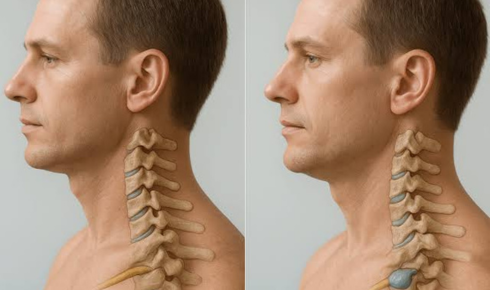
When a spinal specialist tells you that you have a disc bulge or a herniated disc, the terms may sound alarming – and interchangeable. In practice, though, they describe two different degrees of disc disruption, and that difference has real implications for how the condition should be treated and what kind of recovery you can expect.
Neither diagnosis automatically means surgery. In fact, the majority of people with disc-related spinal conditions respond well to targeted, non-invasive care. But understanding what is actually happening in your spine is the first step toward choosing the approach that will work best for you.
Understanding What Spinal Discs Do
Each of the discs sitting between your vertebrae serves a dual purpose: shock absorption and flexibility. They allow the spine to bend, rotate, and withstand the compressive forces of daily movement without the bones grinding against each other.
Every disc has a firm outer layer – the annulus fibrosus – and a softer, gel-like interior called the nucleus pulposus. The integrity of that outer layer determines how well the disc maintains its shape and function under load.
Disc Bulge: The Earlier Warning
A disc bulge occurs when the outer layer weakens but remains intact, allowing the disc to expand asymmetrically beyond its normal boundary. Think of a cushion being squeezed unevenly – the filling shifts outward under pressure while the cover holds.
Bulging discs often produce no symptoms at all, particularly in their early stages. When symptoms do appear, they typically reflect the disc pressing against nearby structures: dull aching in the back or neck, stiffness, and sometimes referred discomfort into the limbs if the bulging portion is near a nerve root.
The disc bulge is the earlier warning – the point at which the structural integrity of the disc is compromised but the damage has not yet progressed to full rupture. Early Disc Bulge Treatment is significantly easier than managing a full herniation and produces faster results.
Herniated Disc: When the Outer Layer Ruptures
A herniation occurs when the outer layer tears and the inner nucleus pulposus pushes through the breach. This protruded material can press directly against a spinal nerve root, causing symptoms that are often more acute and neurologically defined than those of a disc bulge.
Neurological symptoms including sharp radiating pain, tingling, numbness, and weakness in specific limb distributions reflect the nerve root that is being compressed. A herniation in the lower lumbar spine typically affects the leg (sciatica), while a cervical herniation may produce arm pain, hand weakness, or finger tingling.
Despite the more dramatic presentation, a herniated disc in many cases still responds to expert non-surgical care – particularly when treatment is started before chronic nerve changes develop.
Shared Causes, Shared Risk Factors
Both conditions develop through similar processes:
- Gradual disc dehydration and loss of elasticity as part of the ageing process
- Extended periods of poor posture that create chronic asymmetric disc loading
- Incorrect lifting mechanics that place sudden high pressure on vulnerable discs
- Sedentary habits that weaken the core muscles normally responsible for sharing spinal load
- Repetitive strain from physically demanding work or sports
Understanding your personal risk factors is an important part of both treating the current condition and preventing future recurrence.
Non-Surgical Treatment for Both Conditions
Non-Surgical Spinal Decompression Treatment is one of the most effective tools available for both disc bulges and herniations. By applying a controlled, intermittent decompression force to the affected spinal segments, decompression treatment reduces the pressure inside the disc and creates conditions that encourage the protruded material to retract. Improved circulation to the disc supports its natural hydration and repair process.
Complementary physiotherapy rehabilitates the muscles that support and protect the spine. Manual therapy addresses secondary tension and joint stiffness. Postural correction reduces the ongoing loading patterns that created the disc vulnerability in the first place.
At ANSSI Wellness, both disc bulge and herniated disc cases are assessed individually before treatment begins. The treatment plan for each patient reflects the specific level affected, the degree of disc disruption, and the presence of any neurological symptoms.
Conclusion
Whether you are dealing with a disc bulge or a herniated disc, the key principle is the same: early, targeted, non-surgical care consistently delivers better outcomes than waiting for the condition to worsen or defaulting to medication as a long-term strategy. The spine has genuine healing capacity – the right treatment creates the conditions for that capacity to work.